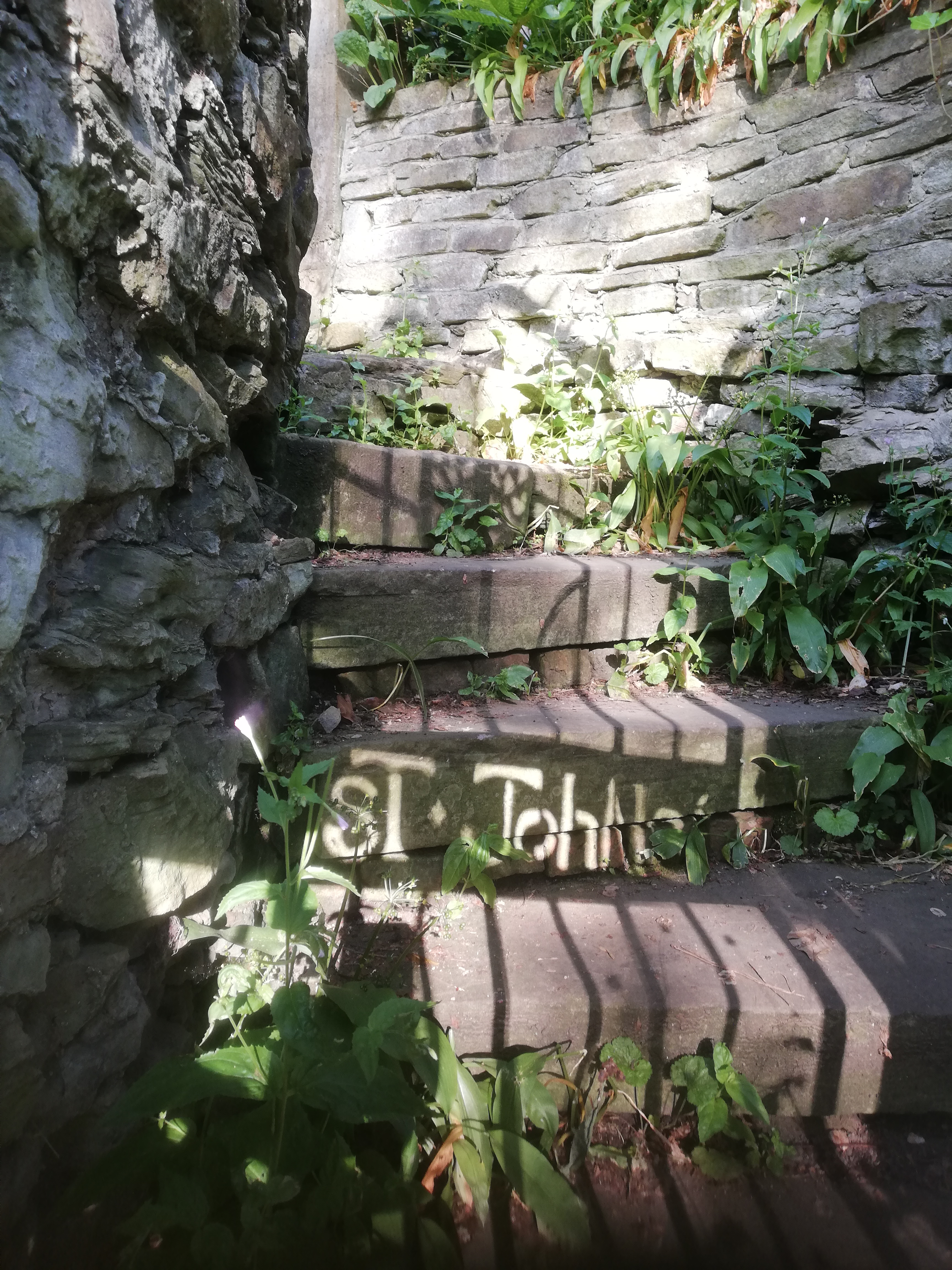
This September, St John’s and St Cuthbert’s Society welcomed more than 40 guests, including alumni from both communities, for a special Secret Gardens of South Bailey event exploring the history, ecology and changing landscape of the Durham peninsula.
For the past four years, St John’s has opened its hidden gardens to the public, sharing the stories of the families who lived on the Bailey in the seventeenth and eighteenth centuries and shaped the buildings and gardens that now form the College. This year, working with St Cuthbert’s Society, we were able to extend the story further along the South Bailey and down towards the river.


The afternoon began with visits to the Wendy House Garden and walks from Prebends Bridge along the shared Presidents’ and Principal’s Walk. Horticulturalist and heritage gardener Ross Pearson explored the ecology and development of the gardens, before conservationist Martin Roberts and historian Dr Adrian Green, both College Fellows and involved with the project from its beginnings, uncovered some of the hidden history of the Bailey and its buildings.
Guests discovered a landscape that has changed considerably over the centuries: from the defensive importance of the steep riverbanks to productive gardens and orchards, and eventually to the wooded riverside landscape familiar to students today. The afternoon ended with a cream tea in St John’s Haughton Orangery and an opportunity to visit St Mary the Less, the College’s twelfth-century chapel.


Caring for the gardens – and sharing their stories
The event is part of a much wider project centred on the historic Principal’s and President’s Walk shared by St John’s and St Cuthbert’s. With support from Durham University’s Belonging Fund, Secret Gardens: Belonging Through Place is exploring how this remarkable part of the peninsula can become a place for wellbeing, stewardship, learning and community.
At St John’s, this builds on work already underway to restore the Principal’s Walk and better understand its history and ecology. Students are getting involved through practical gardening and volunteering sessions, while we continue to explore funding for the longer-term restoration and care of the garden.
Just as important is giving students opportunities to discover and tell the stories of the place in which they live. Student volunteers helped facilitate this year’s tours, welcoming visitors and bringing together the history of the Bailey with their own experience of College life today.

PhD student Simeng writes:
“I volunteered because I wanted to delve deeper into the history of the Bailey and help our guests experience the warmth of St John’s. It was incredibly rewarding to collaborate with St Cuthbert’s Society and learn about the historical legacy of our College, for example, the history of the Bowes family.
“The highlight for me was realising how drastically our surroundings have evolved. Hearing that the riverside woods we walk through daily were kept clear as medieval fortifications and later used as vegetable plantations helped me visualise the land transforming over time. It was an absolute honour to guide visitors and share the rich and living history of our College.”
MA student Phoebe adds:
“Having lived in John’s for two of my four years in Durham, I thought I’d come to know the College, its architecture and history pretty well. The Secret Gardens tour made me realise I had no idea of the stories that make up the history of the place I’ve come to call my second home.
The illustrations from hundreds of years ago showing the gardens of the peninsula felt as though they revealed a deeply kept secret – it was almost unbelievable how their structure has changed over time. I left with a much clearer picture of St John’s, the Bailey, the gardens and their ecosystems, and the city.
It was also lovely to meet Johnians who had studied here in the 60s and 70s, whose stories shed light on different eras of College life. I think it’s so important and valuable for students to learn more about their environment when there is so much rich history surrounding their accommodation.”
The longer-term ambition is to bring together heritage, ecology, wellbeing and belonging, connecting with our new Research Strategy: restoring and caring for these special gardens while creating more opportunities for students, alumni and the wider community to experience them. By involving students not only in the practical work but also in researching, interpreting and sharing the gardens’ stories, the project is helping a new generation become part of the continuing history of the South Bailey.