
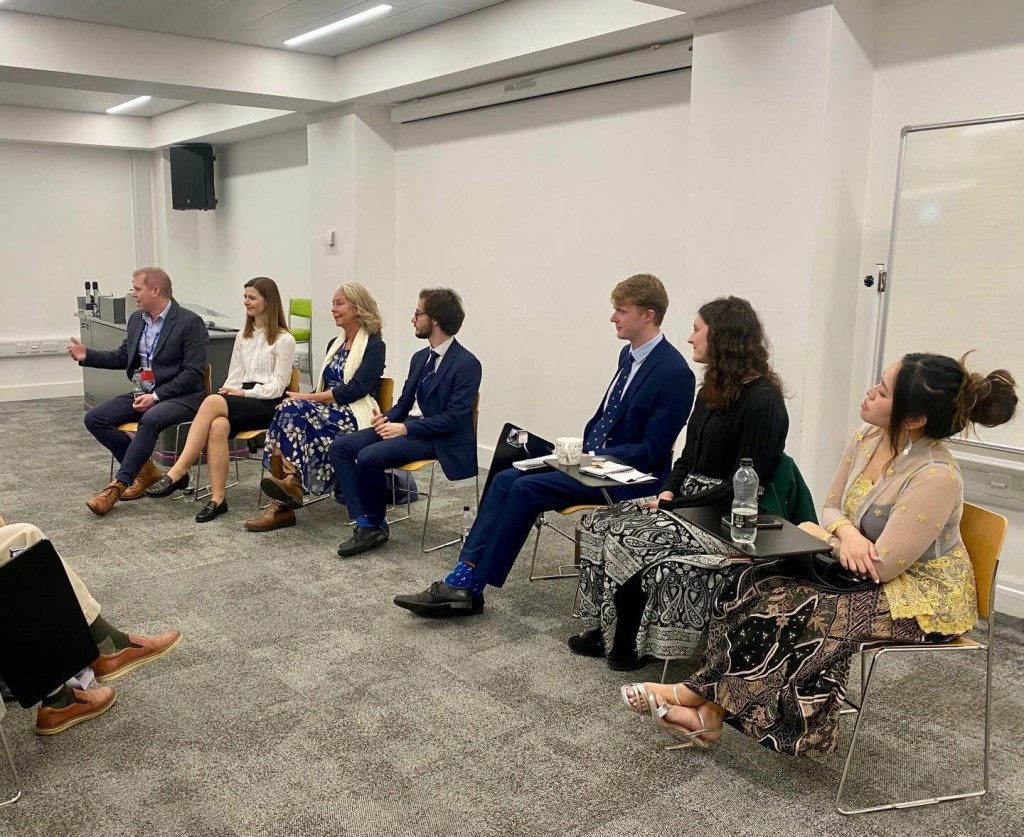
Dan Bavister reviews the St John’s Politics, Policy and Peacebuilding Formal.
We will never forget the image. It has already burned itself into the national consciousness: elderly women – Anglican vicars, no less – being ushered into police vans, treated in the language of officialdom as potential “terrorists”. The photographs possessed a strange, almost theatrical quality. Yet the implications were anything but symbolic. They emerged from the protests surrounding Palestine Action, during which the Metropolitan Police spent well over £10 million enforcing the government’s proscription of the group – a decision the High Court has since ruled unlawful (though the ban remains in force pending appeal).
Whatever intricate legal reasoning originally underpinned the decision, its practical consequences proved deeply unsettling. The public reaction was immediate and wide-ranging: scorn in some quarters, disbelief in others, and perhaps most of all a simmering anger. Across the country, across age, class, religion, and politics, many people saw in the spectacle something that jarred instinctively with the British sense of proportion. The sight of pension-age clergy processed through the machinery of counter-terror enforcement felt, to many, less like the calm administration of justice than an awkward demonstration of the state’s heavy hand.
Britain has never been especially fond of that kind of rule; our history contains a deep and persistent suspicion of overreaching authority. When the cavalry rode into a peaceful reform meeting during the Peterloo Massacre of 1819, the shock reverberated across the country. In response, the poet Percy Bysshe Shelley wrote his fiery protest poem, ‘The Masque of Anarchy’, urging the public to rise “like lions after slumber.” The line has endured for more than two centuries because it articulates something fundamental about the British political imagination: a fierce attachment to liberty, and an equally fierce impatience with authority that strays beyond its proper bounds.
It was precisely these tensions – between protest and order, liberty and enforcement – that made me eager to meet Pete Dearden, Chief Inspector in the Metropolitan Police’s MO6 Public Order Command. Dearden is the sort of figure who rarely receives public attention: a career police officer tasked not with making the law but with enforcing it on the ground. As it happens, he is also a proud alumnus of St John’s College.
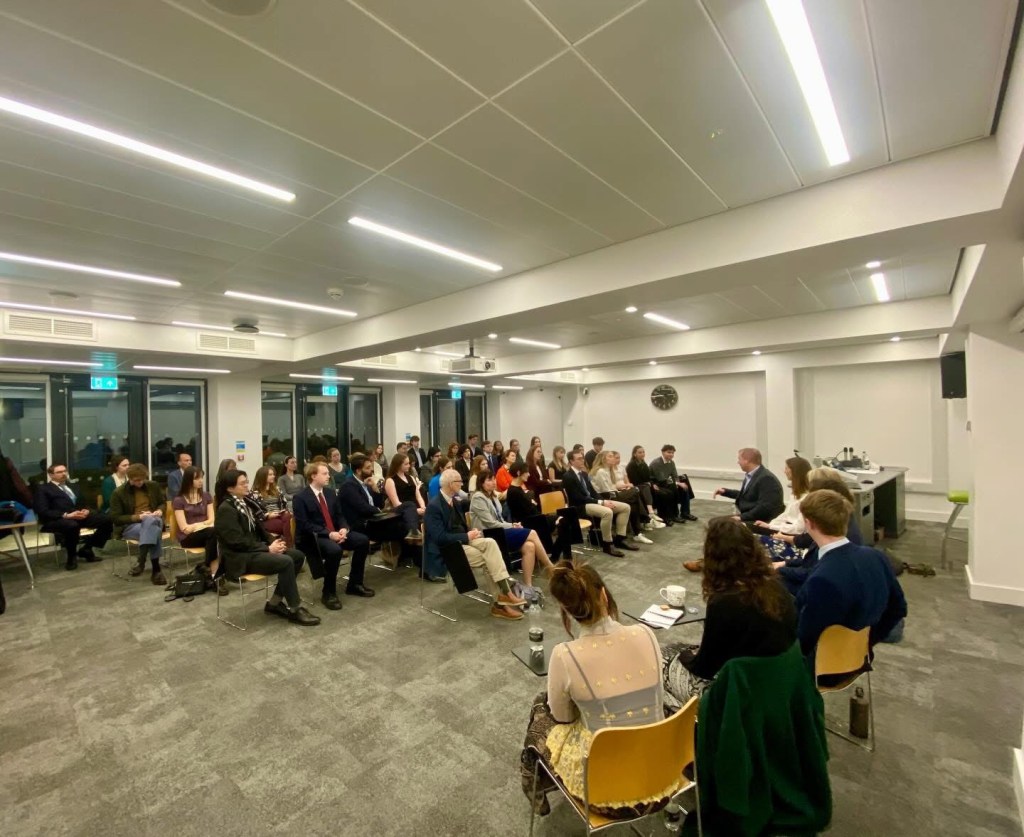
His route into public-order policing, he reflected with some amusement at the pre-dinner panel discussion, may have begun in a rather humbler arena. As a student, Dearden spent time running the St John’s bar, a position that, while lacking the formal trappings of state authority, offers its own apprenticeship in diplomacy, crowd management, and the delicate art of maintaining order when spirits are running high or, as he joked, when someone is making off with a keg of your beer. It is difficult not to see the parallel. The skills required to defuse a tense evening among students – calm judgement, good humour, and the ability to read a room – are not so different from those needed to steward a protest safely through the streets of London.
Dearden was joined by three other distinguished guests whose careers illuminate the complicated ecosystem of modern public service. Matthew Cook, now on the Civil Service Fast Stream, spoke about his work in the Cabinet Office, where he spent a year helping coordinate responses to the array of threats that confront contemporary Britain, from terrorism to pandemics. Those who knew Cook at Durham may remember his energetic involvement in theatre at John’s; the transition from stage to statecraft may appear unlikely, yet his reflections suggested a continuity of sorts. Both worlds, after all, demand an awareness of timing, collaboration, and the delicate choreography of complex human systems.
The evening’s third speaker, Sarah Snyder, director of the Rose Castle Foundation, offered a perspective drawn from international peacebuilding. Snyder spoke movingly about her work with Indigenous communities and the complicated realities faced when states label certain groups “terrorist”. Such designations, she acknowledged, can serve practical purposes for governments. Yet they also create formidable obstacles for those engaged in mediation and dialogue. Peacebuilding frequently requires engagement with precisely those actors whom official policy discourages one from approaching. Conversations are often conducted quietly, sometimes even invisibly, beyond the glare of formal diplomacy.
A fourth contributor, Klara Marland, offered a perspective from the increasingly vital field of cybersecurity and international cooperation. Working with the Global Forum on Cyber Expertise Secretariat since 2022, she helps coordinate international programmes aimed at strengthening cyber capacity across governments and institutions. Marland also spoke about efforts to make this rapidly evolving field more inclusive, particularly through initiatives such as the Women in International Security and Cyberspace Fellowship and the Women in Cyber Capacity Building Network, which support greater participation of women in cyber diplomacy and policy. Her reflections served as a reminder that the frontiers of public service increasingly lie at the intersection of diplomacy and international cooperation.
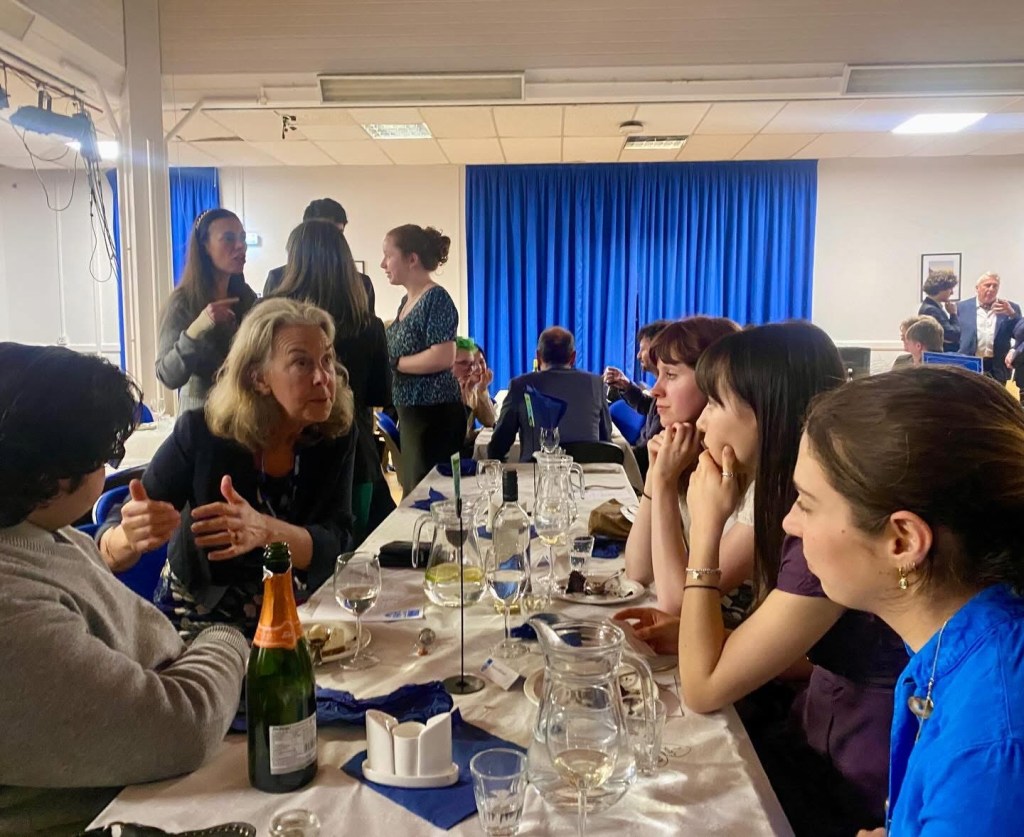
Over dinner – balsamic roast beetroot and goat’s cheese to begin, followed by Tuscan chicken with sun-dried tomatoes and spinach cream sauce, served with Hasselback potatoes and peas –the conversation unfolded with easy candour. A vegetarian sweet potato roulade made its own elegant appearance, and the evening concluded around a generously stocked dessert table.
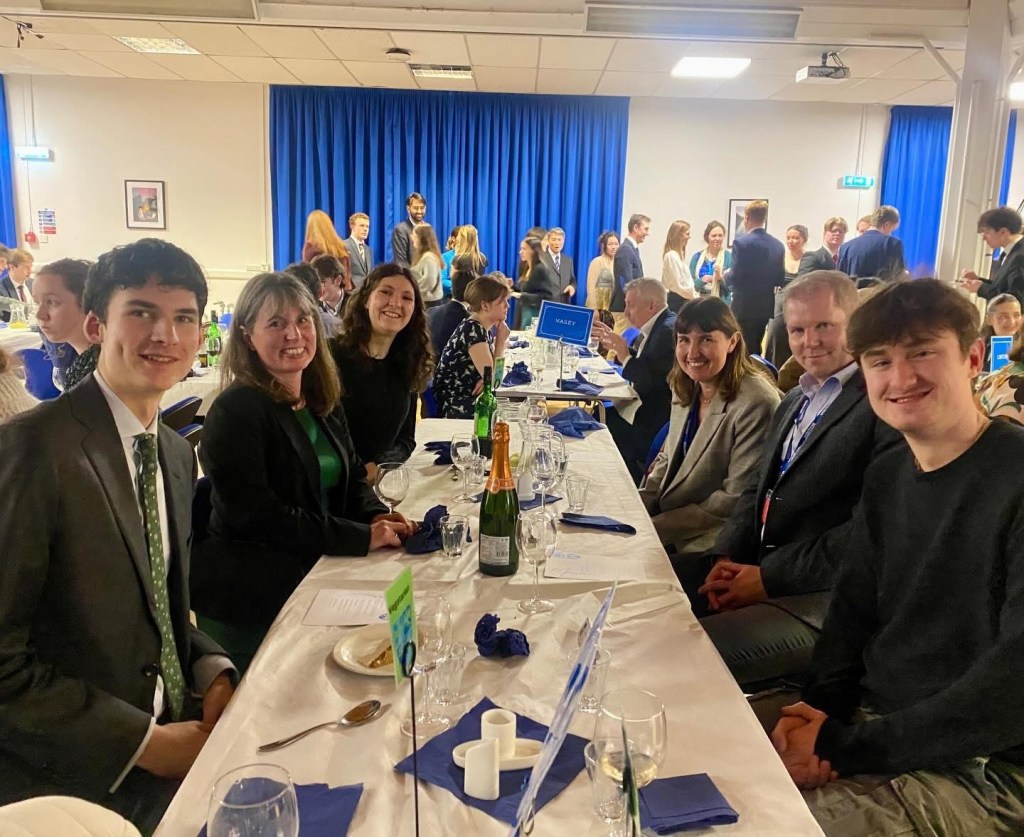
However, what lingered most was not the menu but the sense of encountering the human faces behind institutions that so often appear distant or anonymous. Police officers, civil servants, and peacebuilders revealed themselves instead as thoughtful individuals grappling with complicated moral and practical questions.
This formal was, in its quiet way, a reminder that the machinery of the modern state is not composed merely of rules and offices, but of people. And in moments of public controversy, when stark images flash across the country and tempers run high, it is perhaps worth remembering that truth.
 John's Chronicle
I kinda like the “Peace Mainstreaming” strategy of Franz Jedlicka, an Austrian peace researcher. Maybe you want to take a look ..
Greg
LikeLike