
Pedro Martins De Freitas reflects on his experiences during a recent visit to the Ecumenical Institute at Château de Bossey.
The Brazilian writer and sociologist Gilberto Freyre, in Casa-Grande & Senzala, described the formation of the Brazilian culture through the concept of the “equilíbrio de antagonismos” (equilibrium of antagonisms). This concept sought to explain how Brazil developed as a nation shaped by its past as a Portuguese colony and the history of slavery and the exploitation of Africans and Indigenous peoples. Freyre’s idea referred not only to coexistence but to the creation of something new from the encounters between different and often conflicting cultures. According to sociologist and former Brazilian president Fernando Henrique Cardoso, Freyre’s concept describes a social dynamic in which opposing forces coexist in relative harmony rather than being resolved. While Freyre has rightly been criticised for presenting an idealised narrative of national formation that overlooks structures of oppression and inequality, the image of contrasting realities coexisting and interacting remains a powerful analytical lens. It continues to speak to contemporary debates about pluralism and coexistence, suggesting that new forms of social and cultural life can emerge from intercultural encounters.
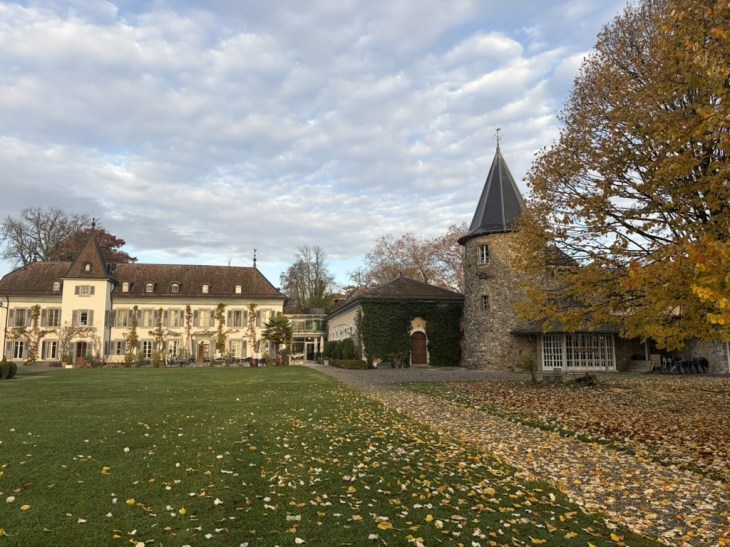
This dynamic of interacting across difference shaped my experience during a recent visit to the Ecumenical Institute at Château de Bossey, which I attended alongside three other St John’s College students and a group of Church of England ordinands from other colleges. Part of the World Council of Churches and affiliated with the University of Geneva, the Institute is set amid stunning Alpine landscapes (not quite as beautiful as Durham’s, though).
During our time at Bossey, we met students from a wide range of academic programmes, national backgrounds, Christian traditions, and life stages. We attended classes on ecumenism, interfaith dialogue, social justice, and ecological justice, learning how theology is shaped by cultural context and lived experience. Given the focus of my doctoral research, I was especially drawn to the Intercultural Biblical Studies class taught by the Revd Fr Dr Lawrence Iwuamadi. As there were no students from the CofE at the Institute at the time, our group was received with particular interest. I was frequently asked about academic life in the United Kingdom, my formation as a PhD candidate at Durham University and as a CofE ordinand. These exchanges embodied the tension and mutual shaping that emerge when different worlds meet.
The diversity of the Institute’s community and the richness of its teaching not only shaped our visit but also encouraged us to learn attentively from perspectives beyond our own. Above all, the experience reinforced the importance of unity across denominations and cultures in the shared pursuit of justice, peace, and equality. Reflecting on this journey, I was reminded that St John’s College, with its diverse student body and staff, offers a similar opportunity. As Johnians, we are uniquely placed to learn from one another in a world where pluralism and global interconnectedness increasingly coexist with intolerance and violence. By seeking mutual understanding and, perhaps, the equilíbrio de antagonismos, we can embrace diversity, foster new forms of social and cultural life, and help build a future where cooperation and understanding overcome division.
Image Credit: Pedro Martins De Freitas
 John's Chronicle