
Arts and Culture Editor Anna Collins-Room reviews ‘Shakespeare Recovered’, the exhibition currently taking place at Durham’s Palace Green Library.
With over 1000 years of history to its name, it’s no secret that Durham is home to some of the North East’s most interesting heritage and culture, and for those studying here, there’s no better opportunity to make the most of what the city has to offer.
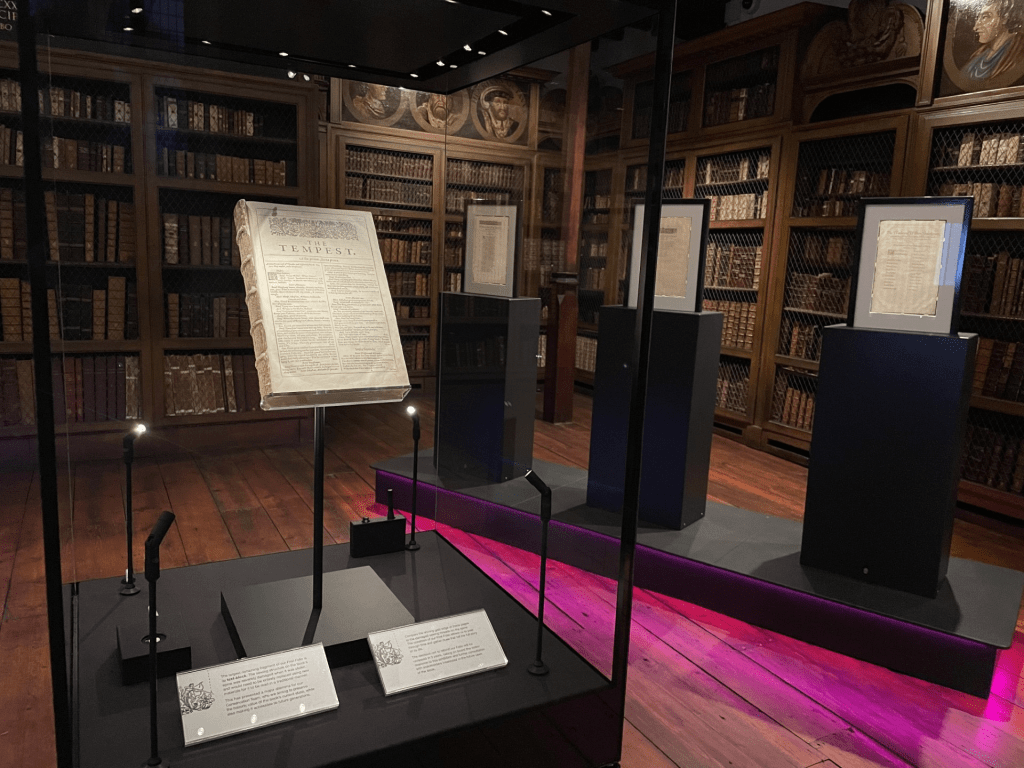
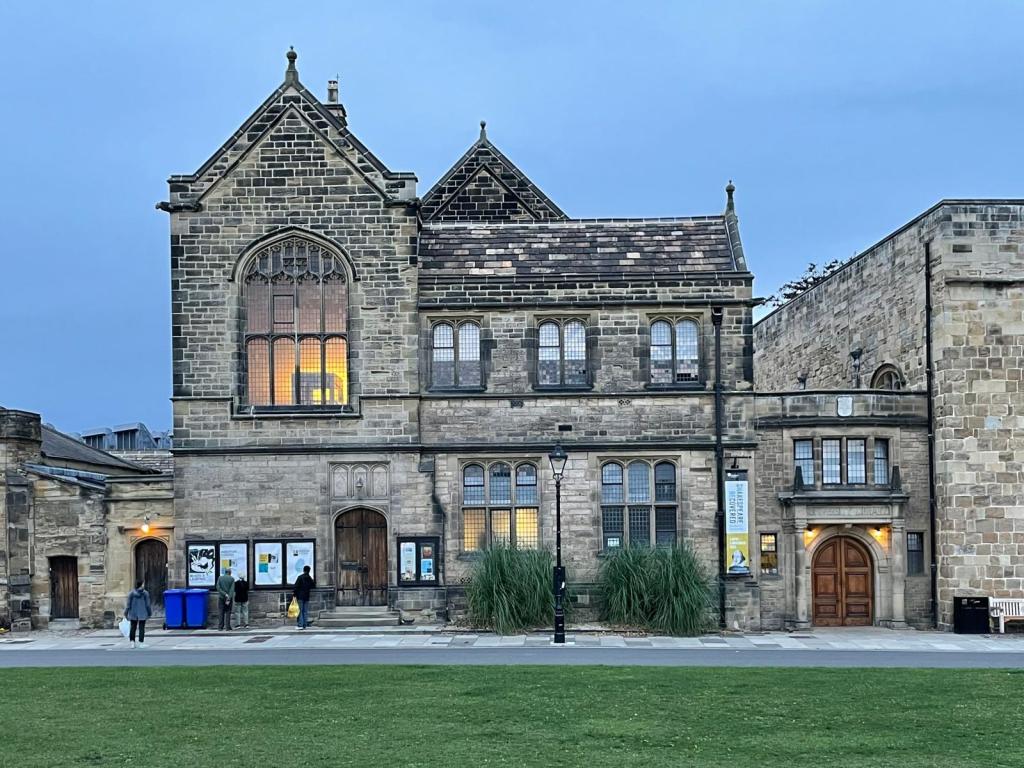
Just a stone’s throw from John’s, Palace Green Library is home to an exciting free exhibition which runs until the 7th of March 2026, showcasing the restoration and preservation of Durham’s copy of Shakespeare’s First Folio. Published in 1623, the First Folio is a monumental book which compiles 36 of Shakespeare’s plays, preventing around half of them from being lost to history.
Durham owes its copy to Bishop John Cosin, who most likely purchased the book in the 1620s, before including it in the public library which he founded in 1699, where the exhibition takes place. Out of an original 750 copies, Durham’s First Folio is one of only around 235 which are known to survive to this day, making it an invaluable artifact in the understanding of English literary history.
As the name suggests, the First Folio was the first collected edition of Shakespeare’s plays, published seven years after his death by his friends and fellow actors John Heminges and Henry Condell, with the aim if preserving his works for posterity and memorializing Shakespeare as the important literary figure he is today.
Unlike previous ‘quarto’ editions of his plays which were smaller and cheaper, the First Folio is an impressive, large, and expensive book which showcases the academic importance of its contents. While quarto editions are often known as the ‘bad’ texts due to the fact that they were often unauthorized and inaccurately transcribed by audience members, the folio offers the ‘good’ versions, most likely transcribed from Shakespeare’s original manuscripts which are now lost. We also have the folio to thank for eighteen of Shakespeare’s plays which had not yet been published, including Macbeth, The Tempest, Julius Caesar, and Twelfth Night.
As well as being a treasure trove of some of the most influential stories in English literary history, Durham’s copy of the folio has quite the story of its own. The only copy of the book that has been in single ownership for most of its existence, Durham’s folio was carefully preserved and valued by Cosin and his successors, until it was stolen in 1998 along with six other items on display in Cosin’s library.
It was not until a decade later that any news of the stolen items emerged. In 2008, a badly damaged book was brought to the Folger Shakespeare Library in Washington D.C., believed to be a newly discovered copy of the folio needing authentication for sale. After close examination, the details of the book’s damage helped experts to identify it as Durham’s copy, and it was safely returned to its rightful home.
Marking 400 years since the time of the First Folio’s publication, the exhibition tells the story of what happened next, detailing the preservation and documentation of this historic artefact. As well as the folio itself, visitors can see multiple loose pages of the book up close, as the exhibition explains how experts used features such as creases in the pages and handwritten notes to identify Durham’s copy.
The exhibition also features a facsimile copy visitors can dive into, as well as a fascinating video following the conservation techniques experts are using to ensure the folio can be seen by visitors for as long as possible, hopefully preserving the magic that is Shakespeare for generations to come.
The exhibition is on until the 7th of March 2026 and is free to enter (make sure to book a slot before going via Palace Green Library’s Eventbrite) and is sure to provide an unforgettable experience for all those with a curious eye and an interest in England’s literary inheritance.
Photo credit: Anna Collins-Room.
 John's Chronicle