
John’s is full of opportunities for charity work. Anna Collins-Room, DUSVO and Fundraising Coordinator for the SJCR, describes her experience of the Charities Formal and explains how to get involved in charity projects or roles through John’s and the SJCR.
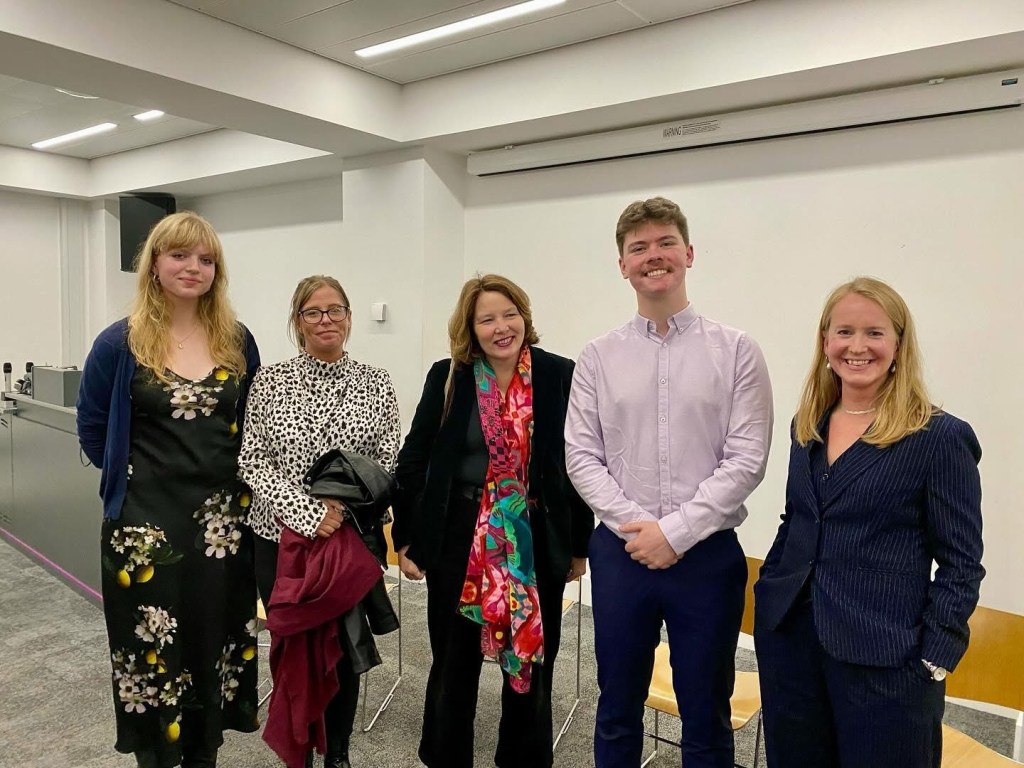
Last week, I had the privilege of being invited to chair the panel discussion at the latest ‘Once a Johnian’ careers formal, centred around working in the nonprofit and charity sectors. The formal was a vibrant and inspiring event, with a diverse selection of guests offering a wide range of perspectives on charity work at both local and national scales. Whilst the insights began at the panel discussion, the conversation between students and guests continued throughout the evening, facilitated by the subsequent drinks reception and the integrated seating plan during the formal dinner itself.
On the panel were guests Annika Greco-Thompson, Growth and Relationships Manager for the London-based Christian donor advised fund Stewardship; Dr. Anne Allen, Senior Manager of Durham World Heritage Site and Associate Director of Durham University’s Institute of Medieval and Early Modern Studies; Paula Snowdon, North East Regional Development manager for Coalfields Regeneration Trust; and recent Johns’ alumnus Matt Bourne, Business Development Officer for North East-based homelessness charity Handcrafted.
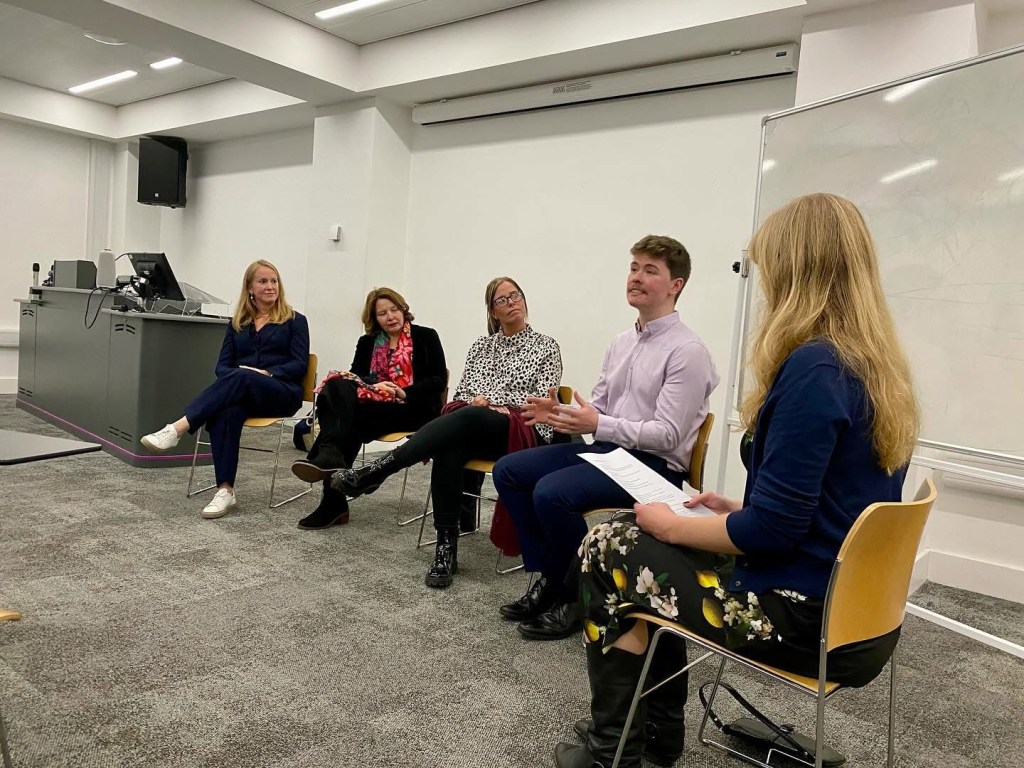
The panel began with guests describing what it was that appealed to them about work in the nonprofit sector, and how they got involved in their current roles. For Paula, working at Coalfields is all about giving back, following in the footsteps of those who had supported her through difficult times growing up in a disadvantaged community, historically affected by the closure of coal mines like many others across the North East. By managing local community regeneration projects, Paula is able to empower others to make a real difference to people’s lives.
Matt followed on by describing the most rewarding aspects of day-to-day work in the charity sector. Looking back on his time in the Graduate Trainee scheme at Handcrafted, Matt described the benefits of providing frontline support work for those in need, giving them the skills and resources to turn their own lives around. At Handcrafted, this support is delivered via a range of hands-on workshops, from carpentry to cooking, giving people transferable skills that they can take into employment. In particular, Matt described how rewarding it was to see people feeling proud of their achievements, having helped them to see that they are more capable of success than they perhaps previously thought.
Turning to challenges faced in the panellists’ careers, Annika began by describing her non-linear path into the charity sector. After working in various different customer service and teaching roles, Annika cites her faith as the factor which led her into her role at Youth for Christ in Lebanon, where she provided aid and support for young people affected by the ongoing conflict. According to Annika, the best decision she made regarding her career was taking the leap into charity work, and she has never looked back since.
Anne spoke about a similar turning point, referencing the moment she decided to branch out into heritage work after seeing a role advertised in a university staff newsletter. Her main advice for students was to take advantage of all the opportunities on offer at university, and to not be afraid to get stuck into something inspiring. Looking back on her time here as Deputy Director of St. John’s College from 2017-2021, Anne highlighted the experience of being involved in the construction of the LRC, and the process of finding and documenting archaeological remains found beneath the construction site. She found working with a team of local Youth Ambassadors and university students to document the process through an exhibition particularly rewarding, mentioning how great it was to see young people from different countries and backgrounds come together under their common interest of heritage. (For those interested in the process, the exhibition is still on display on the ground floor of the LRC!)
When asked about the best skills and attributes to bring to the charity sector, the panellists agreed that an open mind, determination, and resilience were key. Matt highlighted the importance of having the confidence to forge your own path, especially in a highly academic environment which is often biased towards more traditional careers, which are often viewed as more ‘prestigious’. Paula and Matt also noted the importance of dealing with the fact that it is impossible to help absolutely every person in need, pointing out the strength and confidence to know that you are doing enough.

So, for those interested in getting involved in charity work in any capacity, John’s is a great place to start! There are multiple volunteering and fundraising roles available within the SJCR which you can run for at meetings, and numerous projects underway both within John’s and in the wider university. To stay in the loop, I’d recommend following @chadsjohnsvolunteering on Instagram, and signing up to Durham University volunteering platform where you can access a wide range of opportunities, as well as log your hours and get recognition for your efforts. Whatever you choose to get involved in, you’re guaranteed to make some brilliant memories and gain some invaluable experience!
Photo credit: Rebecca Bouveng
 John's Chronicle