
Imogen Taylor, Head of Communications, Media & Alumni Relations for the Chronicle, talks to Ian Bunting and his granddaughter Eryn Reiss, both alumni of John’s. Ian was Director of Pastoral Studies for Cranmer Hall (1971-1978) and Eryn was an undergraduate student in John’s studying Modern Languages (2018-2022).
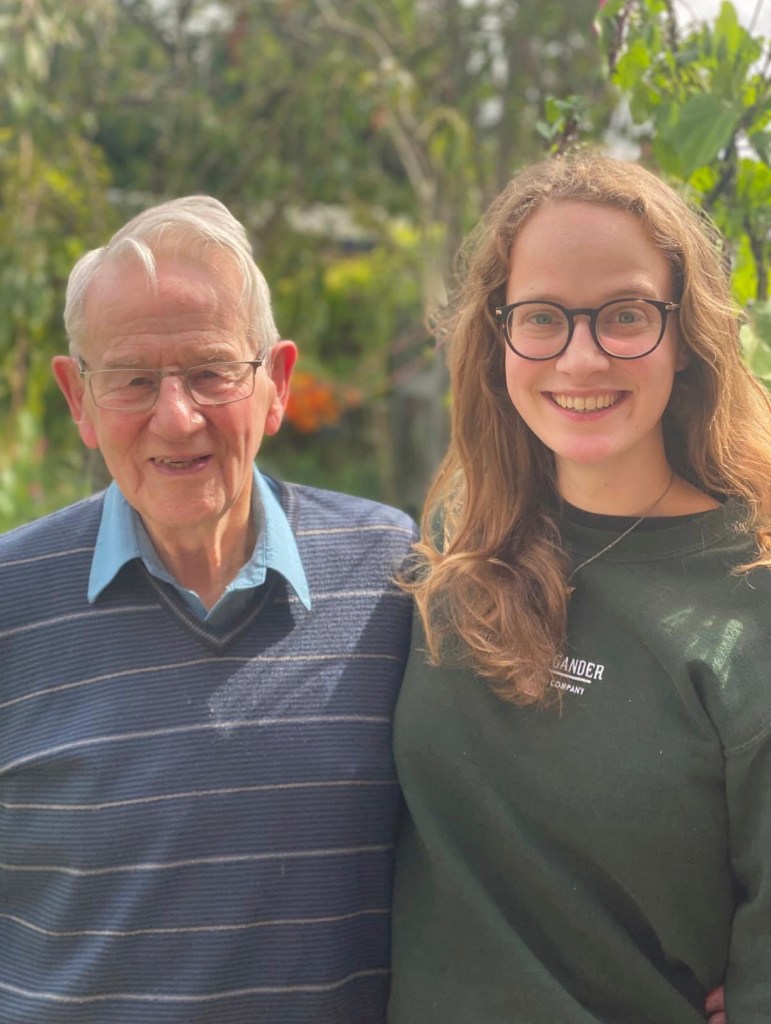
It seems a rare occurrence that we find generations of families scattered in John’s history, but then again is it actually that rare? Many of you may have read the ‘Two Generations of Johnians’ article on the mother and daughter, Nicolie and Issy Chaffe, which when it came out was a wonderful surprise. Never did I imagine that another instance of generational Johnians would come to light but here we are. It does make me question though, how many of you are out there that have some familial connection to our historical college? Is this more common than we think? And what does this say about the John’s community?
The story of Ian Bunting and his family is quite extraordinary, with St John’s College touching many meaningful and varying aspects of their collective tale. It started with Ian of course. He joined the college in 1971 after becoming the Director of Pastoral Studies in Cranmer Hall, for which he maintained the position for 7 years. During this time, Ian’s children grew up in 16 South Bailey which was the building that originally stood where now the Learning and Resource Centre (LRC) stands. Ian reassures me that he was absolutely delighted when the LRC was built, saying that it was a ‘really good use of the space’. Eryn amusingly recounts that when she came to Durham with her mother, after she had applied to John’s, that her mother declared ‘this was my bedroom!’ whilst standing in the current LRC stairwell; Eryn’s mother had lived there from the age of 5-12. Of course, the cottage had not always been home to Ian and his family. Prior to being their abode, 16 South Bailey had been the college butler’s cottage, which at the time Ian believes to have been owned by the cathedral and later was given to John’s. Following Ian’s departure in 1978, the senior tutor, Bruce Kay, took up residence with his family in the cottage. Ian notes that even after the cottage was extended, it was still confined and relatively small with a compact garden.
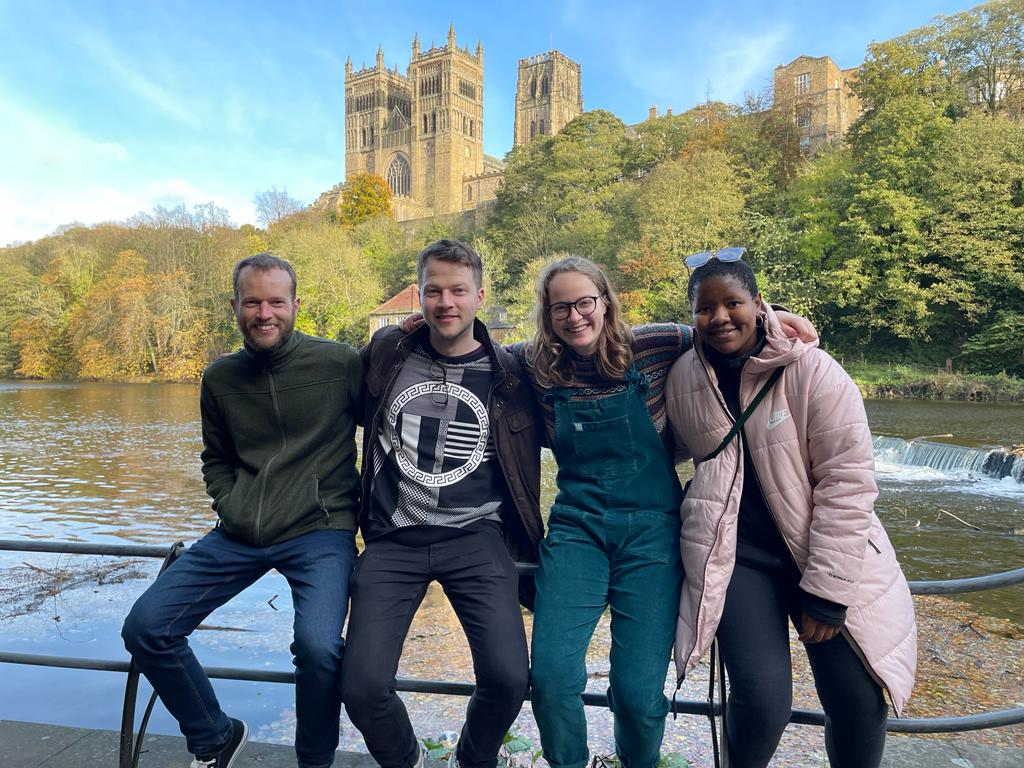
Two of Ian’s grandchildren, Eryn and Joel, found themselves at Durham University generations later. Joel was originally allocated Van Mildert but later requested to transfer to John’s after he discovered his grandfather’s connection to the college. Ian tells me that this was of course delightful news and that Joel had enormously enjoyed his time at John’s, being an ‘avid and able member of the frisbee team’ at college. Eryn later followed in her grandfather and brother’s footsteps when applying to universities. She recalled how she knew she was going to attend university and was drawn to Durham after Joel had ‘vetted’ the place, and knowing the familial connection through her Grandpa and her mother growing up on the Bailey – ‘the knowledge that it had been special for them and they had a positive experience made me think that it could be the same for me.’ Eryn added that one of the core reasons she was driven to apply to John’s was that, for other members of her family, being in this college had led to lifelong friendships and was a placed filled with sentiment for everyone. This inevitably made her want to experience it for herself and in some ways leave her own mark on a place that was tied to her family history.
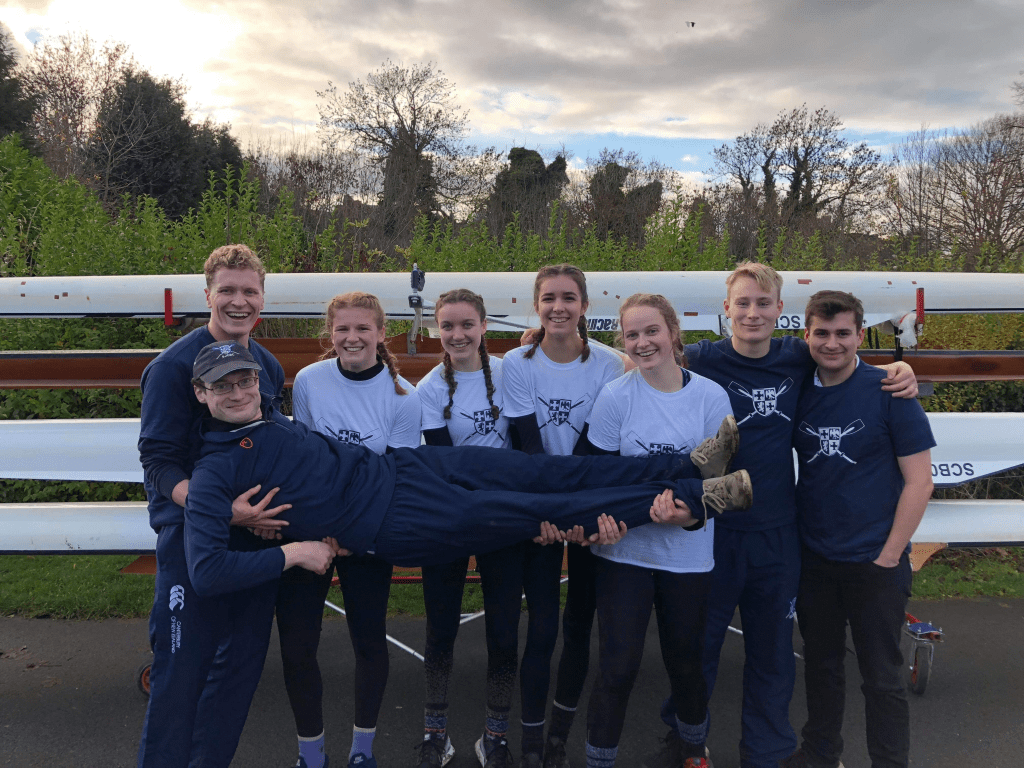
Many of Eryn’s friends from her corridor in first year are still her closest friends – ‘I owe John’s and Grandpa a lot for that!’ When asked if she had any fond memories that had stayed with her since leaving Durham she replied: ‘I’ve got a fairly unremarkable answer in that it was not the big things that stayed with me but rather the small. It was not the memory of matriculating or Bailey Ball or my graduation that I remember as fondly. It’s the random moments with friends in Cruddas B corridor, my house shenanigans in second and fourth year, the silly games that you play with friends that stand out. However, I remember capsizing a wooden boat in one of the first rowing outings which we had been told was uncapsizable!’ Durham also had another special place in her heart as it was where she met her partner, where the beginning of the relationship blossomed.
Speaking of romance, Joel got married last September and the person that married him and his wife was one of Joel’s good friends from John’s, James Green! It is also worth mentioning that James is married to a fellow Johnian, Alice. Clearly, the statistic that around 72% of Durham students will marry other Durham graduates is likely true! Ian remarks that it is ‘one of the winning strokes of John’s and Cranmer – that is the friendships, relationships and groups that seemed to have formed’.

Eryn’s experience of John’s was unique as she was part of the cohort of students during Covid times. Although she was on a year abroad during the academic year of 2020-21, when she returned to Durham for her final year it was filled with LFTs and cancelled events, with a lot of online teaching. ‘It was weird, it was strange, and it was sad because one of the nicest things about John’s was their vibrant and dynamic community, and Covid made that a struggle.’ Eryn did praise St John’s Common Room (SJCR) as they pushed hard for events and formals to be reintroduced and were very engaged and committed to the student body. She especially recognised the hard work of the SJCR President at the time, Alice Butler, who was brilliant, as well as Molly Byford who was president in the previous year in an even more challenging situation.
Eryn offers her advice to current or upcoming John’s students, saying ‘remember to really maximise your time living near friends in a walkable city where it only takes around 15 minutes to see one another, as you won’t necessarily have the option after Durham. I think I would have liked to have known that it was alright to sit by yourself at breakfast – I remember feeling quite anxious in the first term, always being up at 8am and going to breakfast with my friends, thinking that my day was ruined if I missed breakfast at 8am. Also don’t put pressure on yourself to make friends quickly as you make friends later throughout the year and later during your time at Durham through societies and modules you take. There are so many opportunities to find people who are like-minded to yourself.’
Since graduating, Eryn moved to France to teach English at a university for a year, as Durham has an established teaching exchange for French graduates. After then, Eryn moved to Edinburgh with her partner to work for a fuel poverty team and a decarbonisation charity. She is now completing a masters at Manchester University. Ian is also rewriting his masters thesis on the doctrine of transubstantiation.
To learn more about Ian Bunting and his time at John’s, read the recent article by Imogen Taylor, ‘A Time of Change: John’s in the 1970s with Ian Bunting’.
Photos provided by Eryn Reiss.
 John's Chronicle