
Life in John’s editor, Maia Tollner, reflects on last week’s Faith and Cultures Fayre and the college community’s aims to embrace cultural and religious diversity.
Last week, Postgraduate law student Fersa Alaina and I shared an insightful conversation about the importance of cultural awareness and embracing diversity. Fersa’s passion for creating a more accepting world shone through. Even from the moment she stepped into St John’s, Fersa aspired to create events which “uplift diversity”, fostering inclusivity and “mutual respect”.
And Fersa did just that, with the help of SJCR Multi-faith Coordinator Neta Morrag. During Faith and Cultures Week at St John’s, volunteers and representatives of faith and culture societies created the Faith and Cultures Fayre in Leech Hall where they made imaginative stalls to share their religious and cultural traditions, even offering delicious foods from their country. The cultural and religious diversity at St John’s and the university blossomed in the space of one afternoon, providing an eye-opening experience into the rich cultural diversity within reach.
To begin, the Iranian society shared poetry by the Persian poet, Hafez. Writing in the 14th century, Hafez created numerous lyrical poems about spirituality, love and morality. You had to pick a number between 1 and 500, and the poem you received, based on the number you chose, provided life advice or an insight into your future. There were also various snacks on display, with saffron cotton candy being a personal favourite!
The fayre also had representatives from religious societies, such as the St John’s Christian Union and the Durham Islamic Society. The latter described the rich cultural diversity throughout Middle Eastern countries, which are united in religion but vary in traditions and cuisine. They also emphasised the importance of having an Islamic society at Durham as an inclusive environment which unites students and forms friendships. Similarly, there was a stall about Judaism, offering a Jewish bread called Challah, which is blessed every Sabbath before it is eaten.
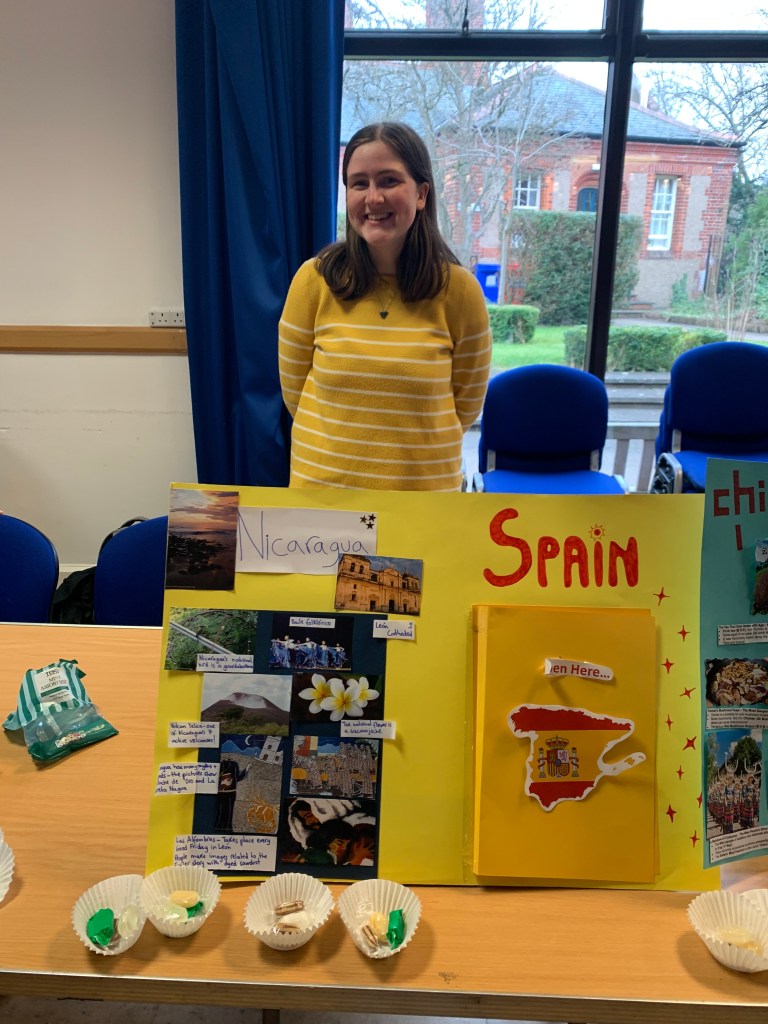
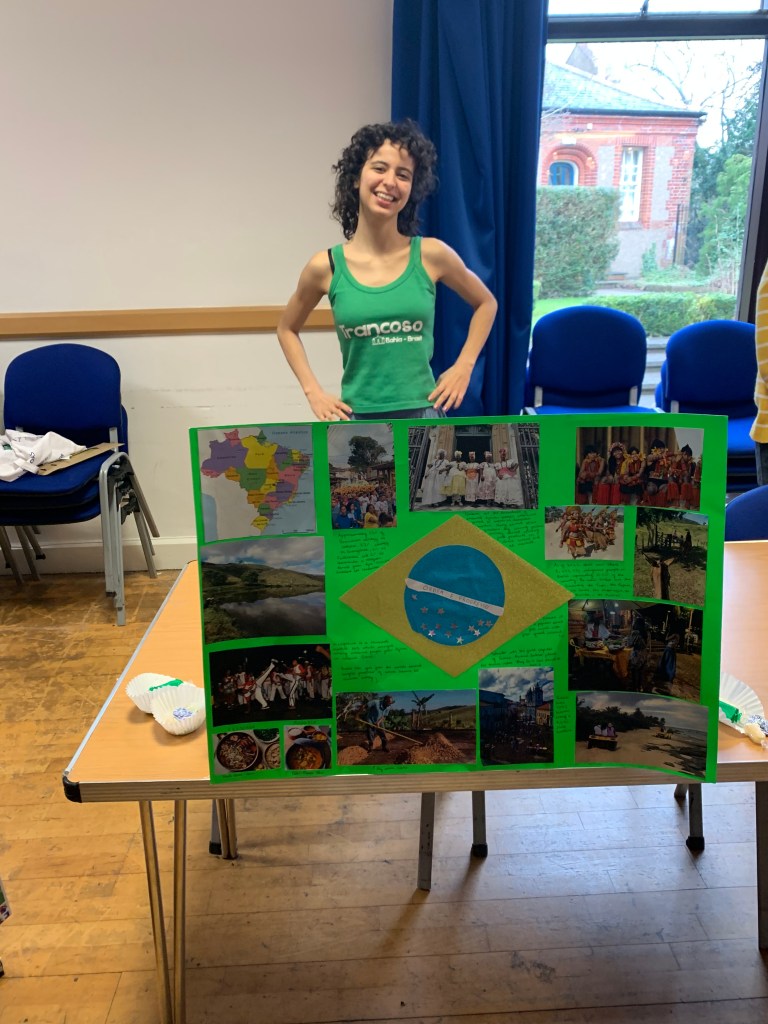
Over in South America, two stalls were illustrating the vivid culture in Brazil and Nicaragua. Both countries are natural wonders, with Nicaragua’s active volcanoes and its national bird, the guardabarranco, and Brazil’s Amazon rainforest and agricultural industry. Although it is a predominantly Catholic country, Brazil has multiple indigenous tribes and the women wear traditional clothing to express freedom from slavery during Brazil’s colonisation. Nicaragua also has the stunning León cathedral where Las Alfombras take place every Good Friday, and people make beautiful drawings from dyed sawdust which depict the Easter story.
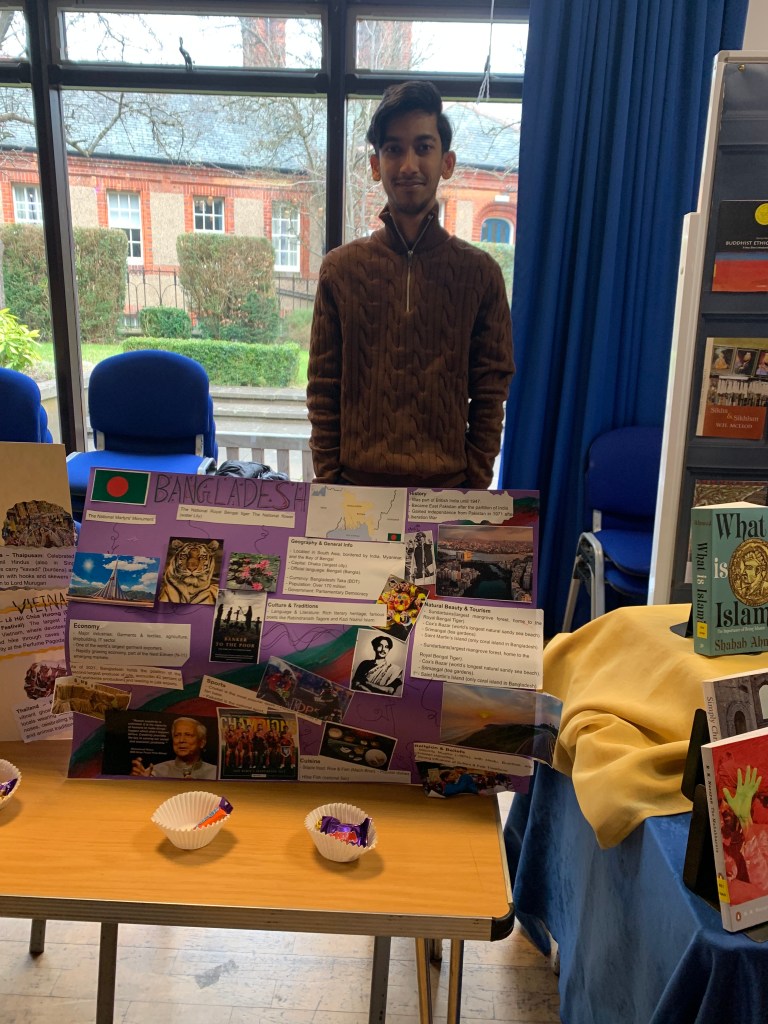
There were also volunteers representing China, Indonesia and Bangladesh. With a complicated history of being under Indian and Pakistan, Bangladesh is now a melting pot of Indian and Pakistani culture, containing traditions and dishes which can be found in both countries. Brimming with various languages, including Bengali, Chakma and Garo, Bangladesh has an enthusiasm for sports, with Kabaddi as their national sport.
Fersa, Neta and their team of volunteers had clearly worked hard to create a welcoming space where we can listen and learn about the traditions and beliefs which form our college, country and planet. It was wonderful to see the cultural diversity at the heart of John’s shone, and the room teemed with a vibrant celebration of cultural and religious identity. As I look back to that Wednesday afternoon and my conversation with Fersa, I feel immensely hopeful. At times, the world feels overwhelming and divided, and so, the best place to promote unity and inclusivity is to start in your community. Fersa emphasised how simply learning about other cultures makes you an active “peace-builder” in the world. And slowly, but surely, one step at a time, our efforts to unite will “make the world a better place”.
Image credit: Maia Tollner.
 John's Chronicle