
Thanks to the Student Opportunities Fund, Emerald Grimshaw was able to present her PhD research on exploring the use of VR as a pedagogical tool. Emerald writes about her time at KU Leuven and her experience with sharing her work on an international level.
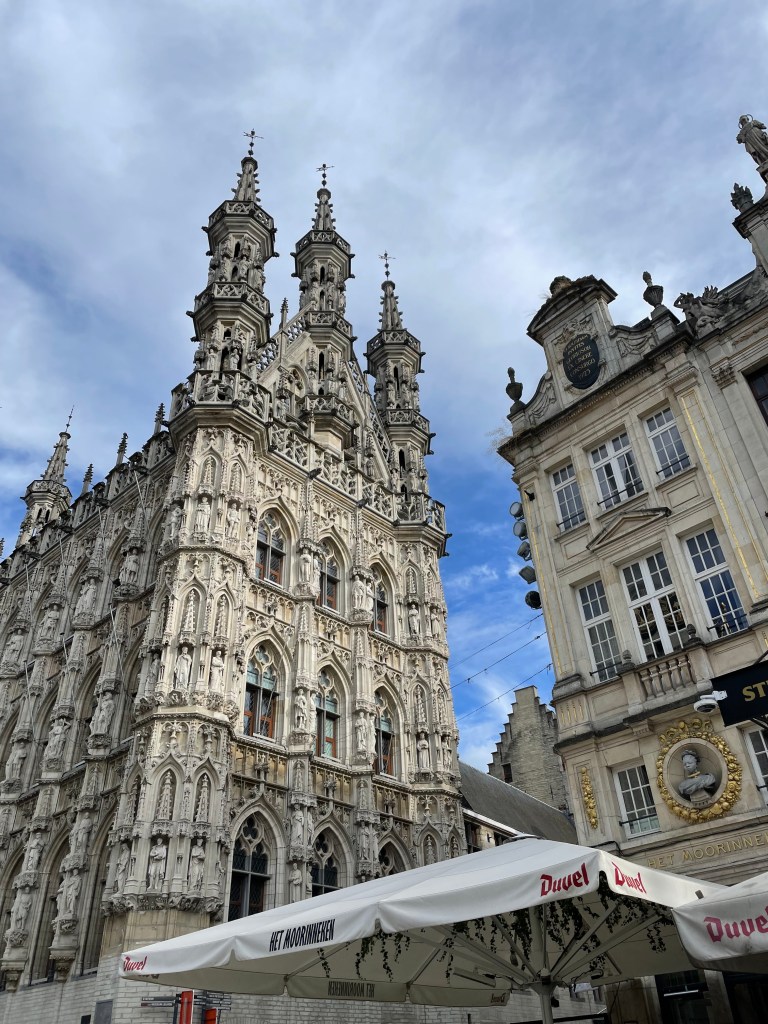
At noon on a balmy summer’s day, I stepped off the double-decker train onto the station platform in Leuven, Belgium. The station has a fabulous metal roof with inter-crossed metal beams sprawling in huge arches over the platforms, and through the gaps in these beams, sunlight poured, striping the platform with bright bands of light.
As I sat in the baking sun on a platform bench, waiting in limbo between my train’s arrival and my hotel check-in time, I couldn’t escape the trepidatious thought sitting in the back of my mind: “I’m in a country where I don’t know anyone, about to walk into a conference full of strangers… Am I prepared for this?” I had no idea what the next three days of my life had in store for me.
The next morning, I strolled down the main street of Leuven, the heels of my brogues clacking on the cobbles of a city that was only just beginning to wake up. I felt excitement brewing as I embarked on the first day of the International Mind, Brain and Education Society (IMBES) Conference. This conference would bring together the fields of neuroscience, psychology and education – in particular, exploring how these areas of research can inform each other.
The day began with a pre-conference, which was half a day of talks and presentations aimed at Early Career Researchers to give us a chance to meet other researchers just starting out on their academic journeys. At the peer networking event, I chatted to PhD students and educators from all over the world, from South America to Italy to India. We shared our research ideas, and these conversations allowed me to hear perspectives that were new and thought-provoking.
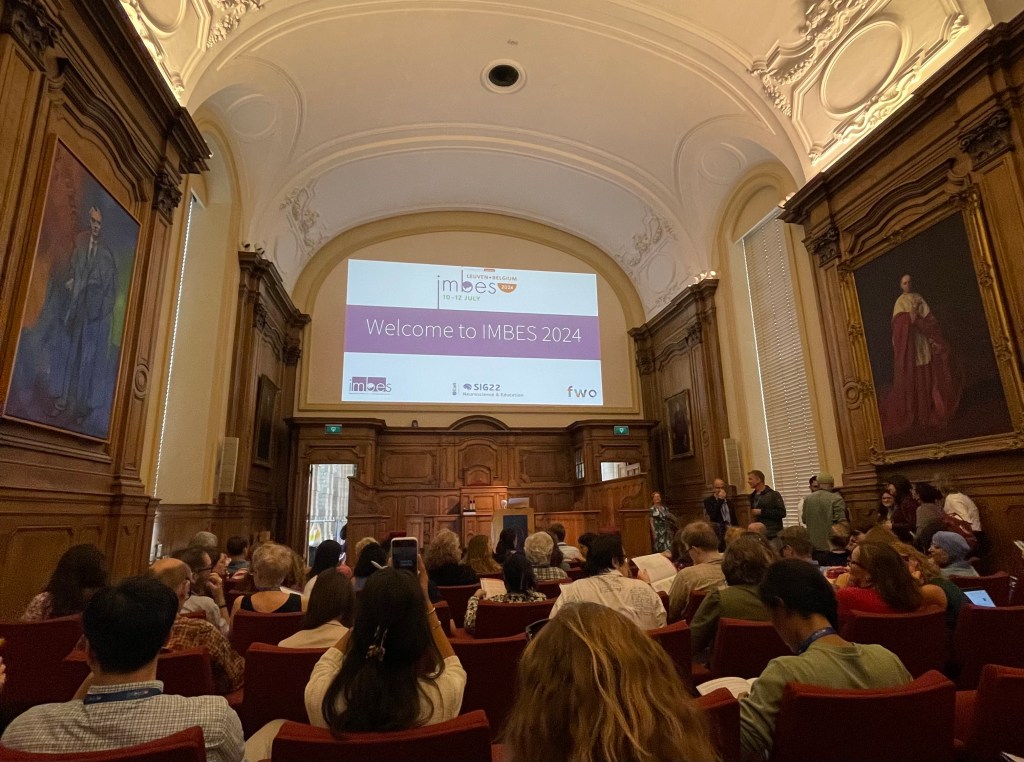
After a morning of inspiring conversations with many friendly Early Career Researchers, the official conference opened in the historic University Hall of KU Leuven. As we sat in the ancient wood-panelled hall, observed by portraits of past academics with their stern faces and prestigious red robes, we were welcomed to this conference by the President of the IMBES, Bert De Smedt. He also warmly welcomed us to the host university of this year’s IMBES conference, KU Leuven, and shared some of the university’s history with us.
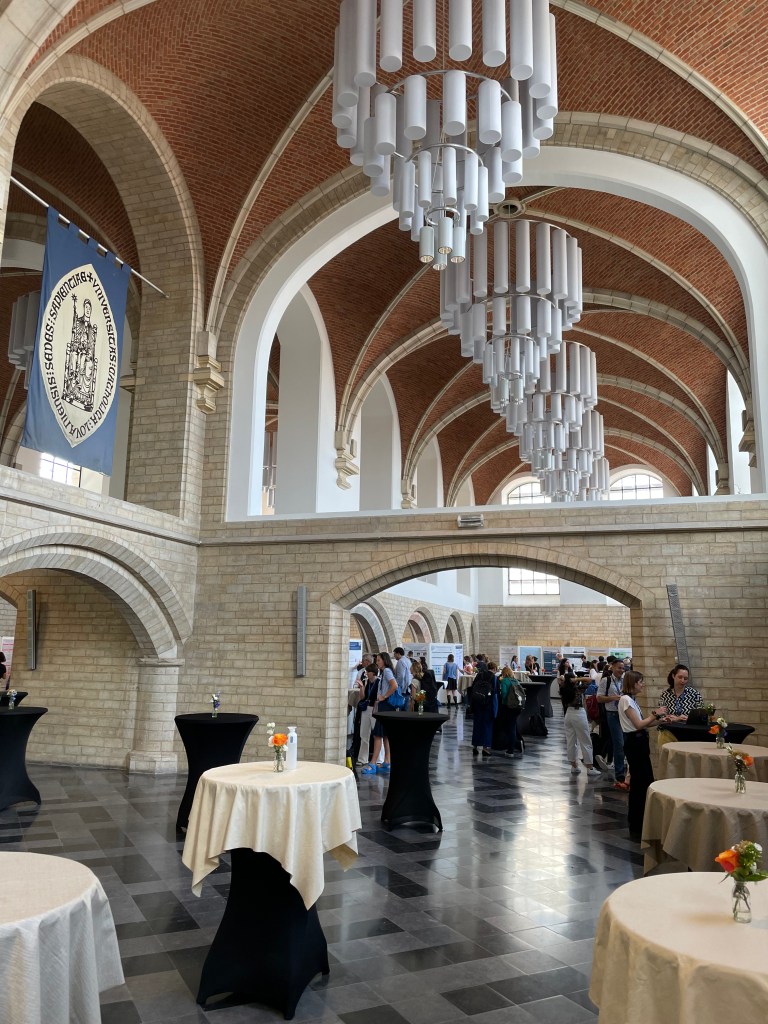
KU Leuven is the oldest university in Belgium. Six hundred years ago, the first students here were taught law, medicine and theology within the vaulted Jubilee Hall (pictured), learning each subject in separate corners of the hall before coming together to share and discuss the ideas that they had explored. This intersection of learning mirrors the way in which psychologists, neuroscientists and educators have travelled from all over the world to IMBES this year to share their expertise.
When the research poster session began the following day, I pinned my A0 glossy poster up in the historic Jubilee Hall amongst around seventy other research posters. Before long, the hall filled with conference guests swarming around the posters, interested in hearing about everyone’s research. Ideas were shared between visitors from the UK, USA, France, Norway, and Italy, just as they would have been six hundred years ago by the first students at KU Leuven.
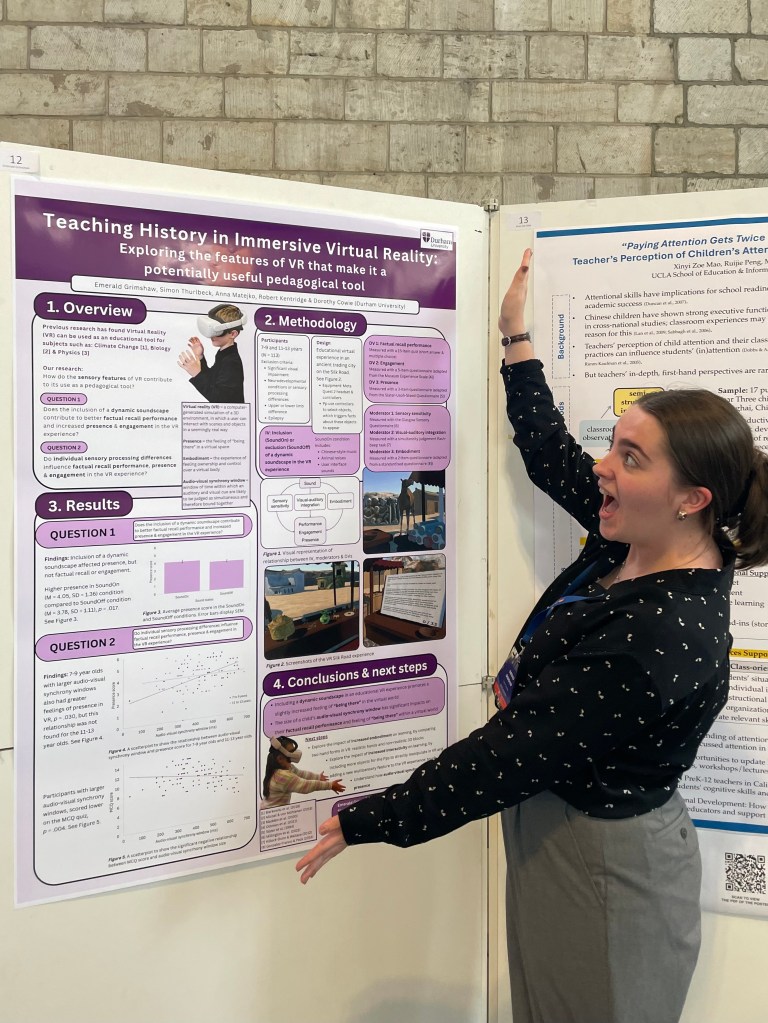
This was the first time I had presented my PhD research at an international level, and it was an invaluable opportunity to receive useful feedback on my project from researchers from other fields, including insightful queries that I had not yet considered. It was exciting to see the engagement and excitement my research inspired when I explained my plans to conference guests, from teachers with twenty years of experience to researchers working in developing new educational technology for the classroom.
Over the three days of this conference, I also attended symposiums on a range of topics, from the development of new technologies to support the education of neurodivergent children, to how student stress levels can impact learning.
As I boarded my train out of Leuven, after making new friends, new connections and with a mind overflowing with new ideas, I thought back to when I arrived in the city just three days before and how nervous I had felt. This was a stark contrast to the joy and excitement I now felt after three days of enlightening conversations and thought-provoking talks. I am very grateful to the St John’s Student Opportunities Fund for awarding me £250 to contribute towards the costs of attending this conference.
Image Credit: Emerald Grimshaw.
 John's Chronicle