
Thanks to the St John’s Opportunities Fund, Zahra Wilkinson was able to complete a research internship at Navarino Environmental Observatory in Greece.
This summer, I had the incredible opportunity to spend a month in southern Greece, taking part in a research internship at Navarino Environmental Observatory, a partnership between Stockholm University and The Academy of Athens.
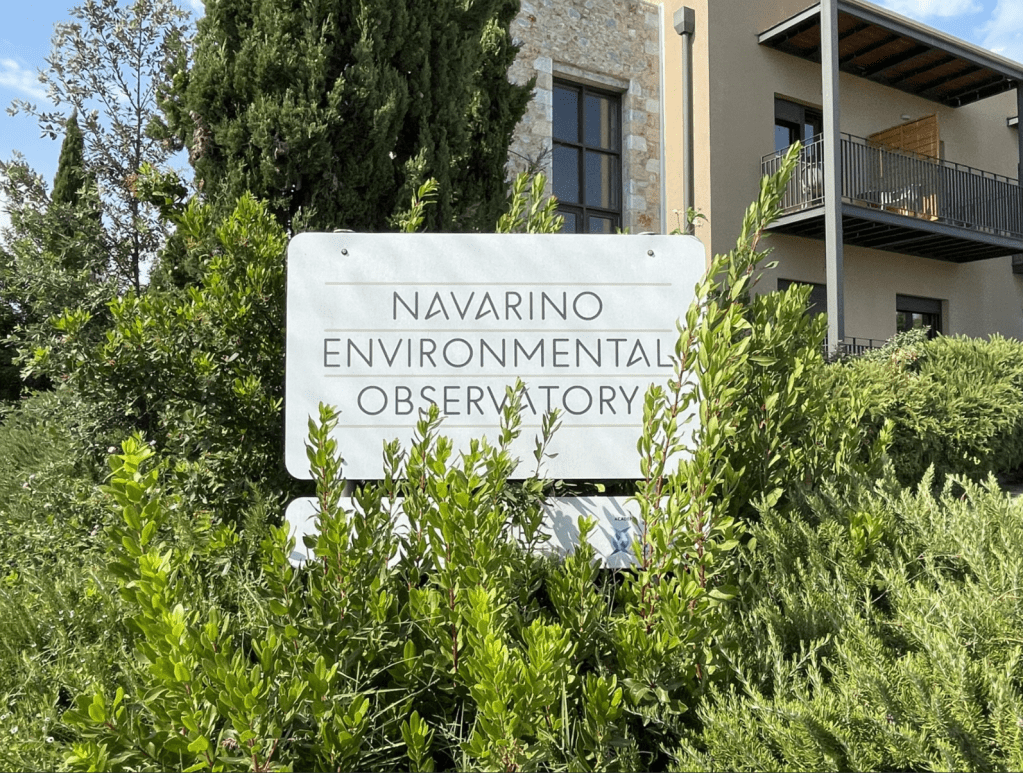
Navarino Environmental Observatory (NEO) is the Mediterranean hub for environmental research and education, where policymakers, scientists and local residents work together towards improving the understanding and sustainable management of the local environment. The research carried out there is extremely important in a world increasingly affected by climate change. I feel exceptionally fortunate that I was able to spend my summer contributing to this ground-breaking work.
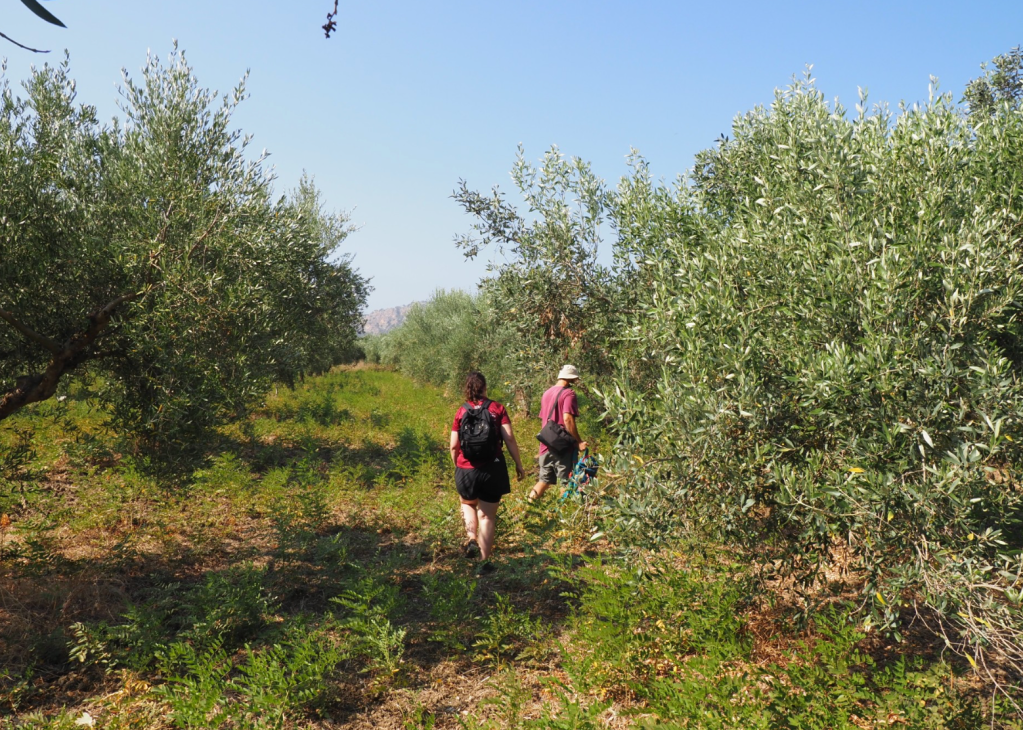
As a Natural Sciences student, my academic interests are wide-ranging. During my internship I was able to get hands-on with a similarly diverse range of projects, including investigating the effects of different irrigation methods on olive production; comparing the effects of herbicides, mowing and natural vegetation on small insect habitats; considering the pressures of tourism on local beaches; and – my personal academic interest – investigating the increasing salinization of the local groundwater aquifer and the Gialova Lagoon, an EU-designated nature protection area due to its unique ecosystem.
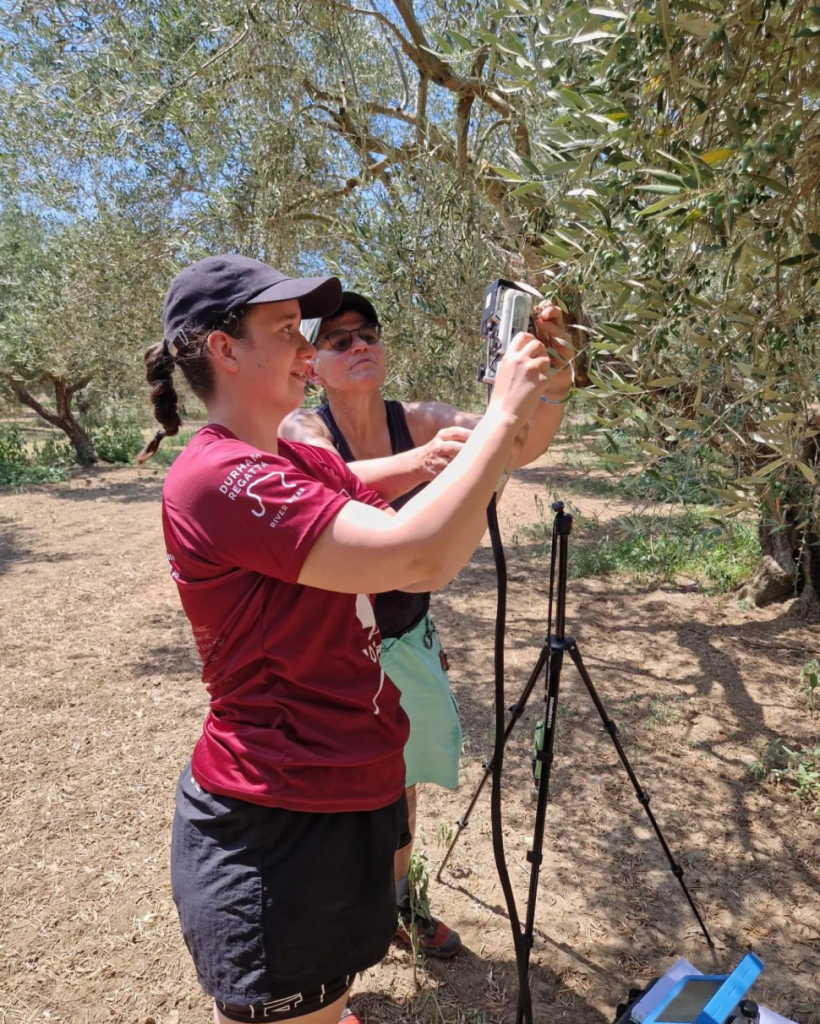
One of the highlights of the experience was being able to meet and learn about the lives and the research foci of the scientists visiting NEO. This included a group of researchers from Italy’s Institute for Sustainable Plant Protection, who spent time with us in local olive orchards conducting eco-physiological measurements on the leaves and aerial surveys of the conditions of the trees in different irrigation settings. The Messenia area of Greece is incredibly reliant on olive oil production, so it was brilliant to see the real impact that this work is having on the local community, and I was able to have incredibly interesting conversations on the topic with local farmers. This led me to develop a self-directed project, during which I investigated the morphological properties of the olive leaves and provided analysis to be used in future environmental management studies.
The most rewarding part of the internship by far was being able to contribute to the research that the station is carrying out on the increasing salt levels in freshwater aquifers. After first learning about this concept in a second-year lecture, it is something that I have continued to pursue in my own time. I measured water quality across a range of locations to better understand the extent of the water salinization and the impact it is having on local olive production, biodiversity and drinking water. I feel very lucky to have developed my own fieldwork, laboratory, analysis and presentation skills, and to have played a part in research that will support coastal areas across the globe to develop methods to protect their drinking water supply.
I would like to thank the donors of the Student Opportunities Fund for their incredible generosity. The fund greatly assisted me in my travel to and from Greece, and as internships in Europe are often unpaid, without this generosity I would not have been able to take part in this life-changing experience. I returned from Navarino Environmental Observatory with a refreshed view on my degree, and with an ignited passion for coastal environmental management that I hope to continue to pursue after graduation. The internship was incredibly impactful on my future studies and was invaluable for my personal development.
Image Credit: Zahra Wilkinson
 John's Chronicle