
Alex Hibberts describes a characterful seminar he enjoyed earlier in summer in an intriguing Devon location, treading in the footsteps of Aldous Huxley and Vita Sackville-West. He was able to get there thanks to the St John’s Student Opportunities Fund.
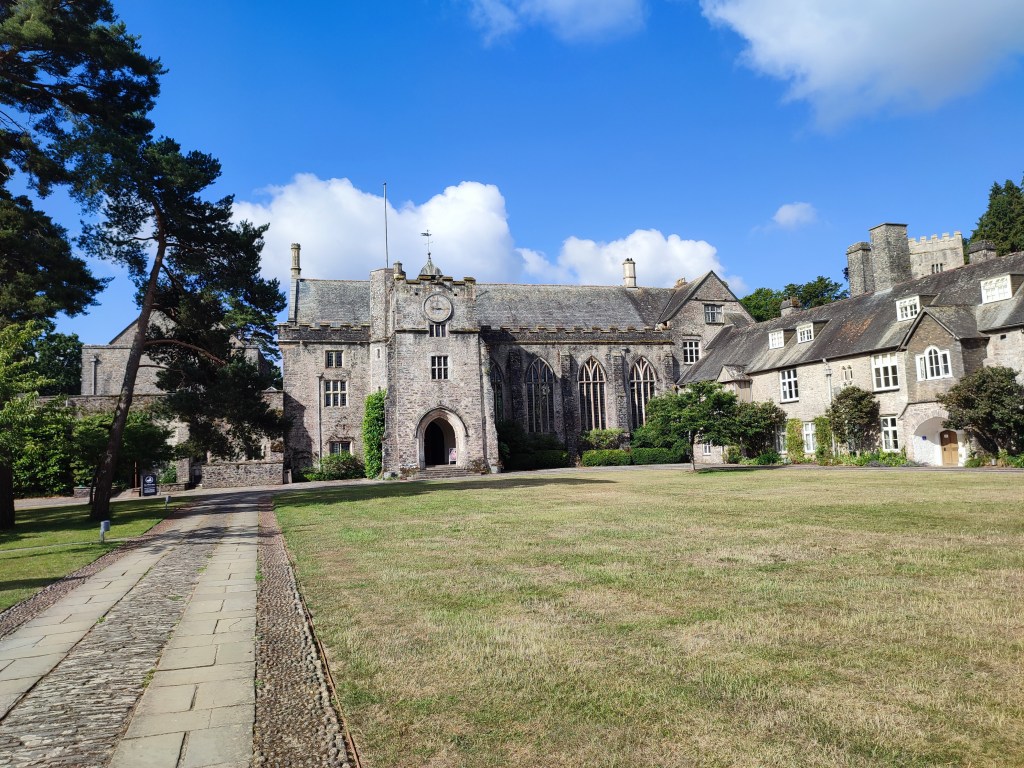
On a hot weekend in early July 2023, an eclectic group of medieval historians met at Dartington Hall near Totnes in Devon. This hotly anticipated gathering assembles every three years to debate, discuss, and dissect all aspects of medieval social and economic life in fascinating detail. Numbers are limited to ensure all participants can become fully acquainted.
Postgraduate students, like me, have the opportunity to rub shoulders with leaders in the field. Organised by Philipp Schofield of Aberystwyth University, a packed programme combined hour-long talks, a symposium on material culture, and an outing to a deserted medieval village in Dartmoor National Park.
There could be no better setting for a weekend exploring the rich medieval past than a fourteenth-century manor house and grounds. The great hall was built between 1388 and 1399 for John Holand, Earl of Huntingdon, and late Duke of Exeter.
However, it is Dartington’s more recent past that is perhaps more intriguing. In the early twentieth-century, rich American heiress Dorothy Elmhirst, and her Yorkshire-born husband Leonard, sought to establish a utopian community at the hall.
This inter-war social experiment was intended as an antithesis to the forces of imperialism, materialism, and militarism that had spawned the First World War. Their incandescent idealism attracted other like-minded individuals, including path-breaking intellectuals such as Gerald Heard, Aldous Huxley, Vita Sackville-West, and Rabindranath Tagore.
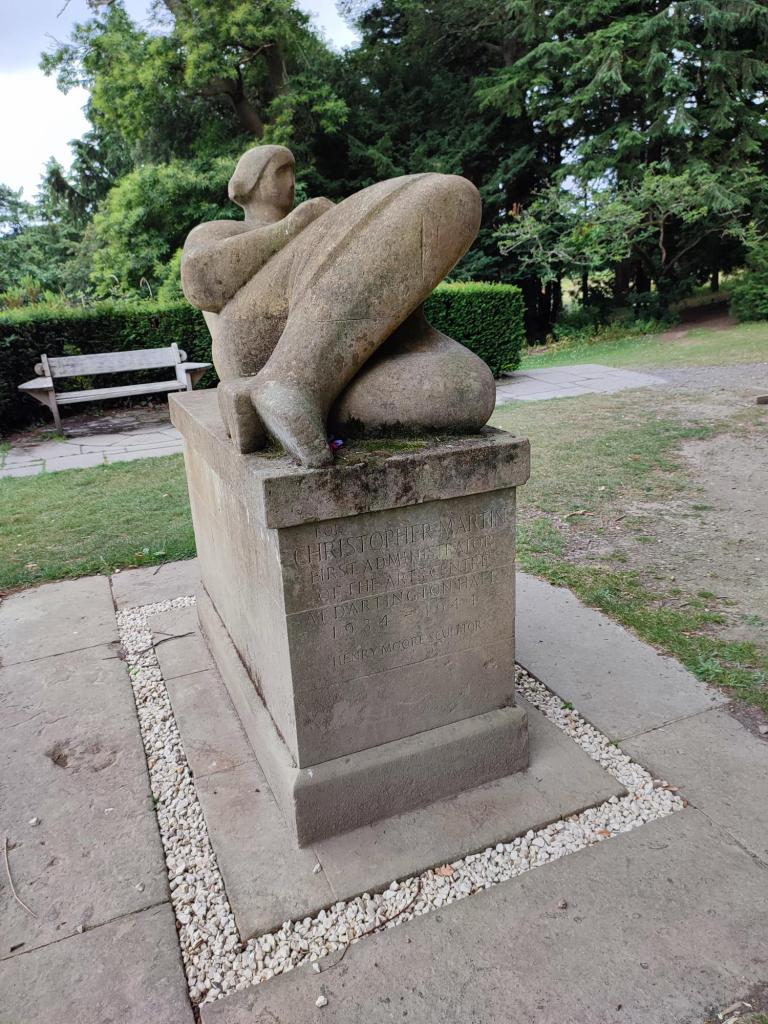
Like all utopias, the trial at Dartington was bound to a particular moment in time and doomed to fail once the world moved on. Nonetheless, the estate is still owned by the trust set up by Dorothy and Leonard. This trust upkeeps the hall, delightful grounds, and supports creative, innovative arts from horticulture to pottery.
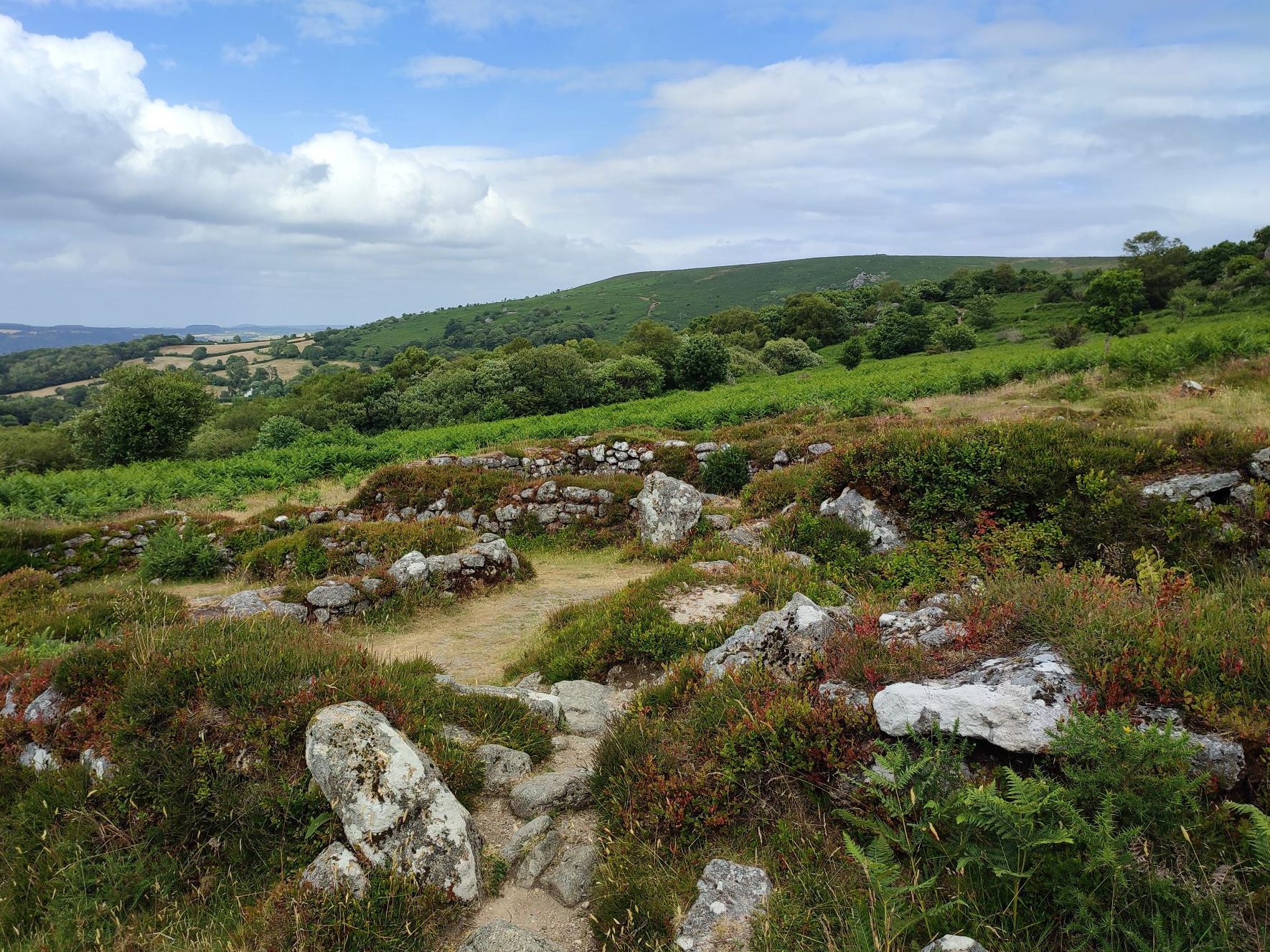
The field trip took place on the last full day and was led by David Stone, a medieval economic and social historian. We visited the village of Houndtor in Dartmoor. This windswept settlement was abandoned in the fourteenth-century, although the exact reasons are still debated; some claim that the climatic downturn of the Little Ice Age was a major factor.
It was left to our guide to evoke the atmosphere of this lost, bracken covered place where stone walls mark the foundations of barns, houses, and outbuildings. Houndtor’s remoteness still draws in new inhabitants; our group encountered a couple engaged in spiritual meditation amidst the ruins of an abandoned dwelling.
The event was attended by scholars from the universities of Durham, Cambridge, Queen’s University Belfast, UEA, Reading, Montpellier, Poitiers, Leicester, Oxford, Fordham, Exeter, York, Manchester, LSE, Swansea, and Princeton.
I am grateful to the Student Opportunities Fund of St John’s College, Durham for covering the costs of travel without which I would not have been able to participate.
 John's Chronicle